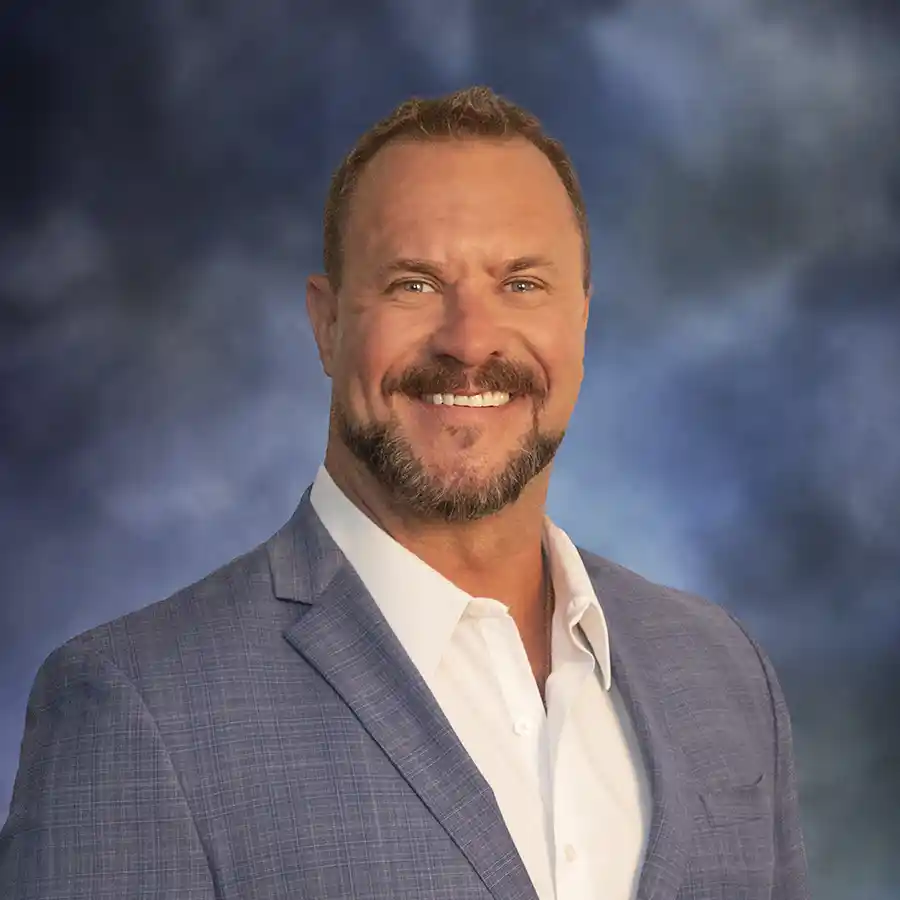
Michael Julian
Second Generation CEO
Executive protection at an annual shareholder meeting or investor day is the coordinated security planning that protects directors, the CEO, the executive team, and on-site staff during a single high-visibility event where the company's most senior people are advertised in advance, gathered in one venue, and subject to questions from anyone with a share or a press credential. It is one of the few moments each year when the leadership of a public company is concentrated in a published location at a published time, which makes it operationally one of the most complex protection assignments a corporate security function plans.
After three decades of running executive protection programs for public-company clients, the lesson has stayed the same: the threat surface at an AGM or investor day is not the threat surface most boards prepare for.
A normal corporate office or executive home has a closed perimeter and a known population. An AGM does not. By design, an annual meeting is open to anyone holding a single share, plus proxy holders, retail-investor advocacy groups, activist funds, the financial press, and, in many cases, livestream audiences whose composition cannot be vetted.
The exposure profile has gotten meaningfully harder in the last few years. The U.S. Secret Service National Threat Assessment Center documented 173 mass attacks in public and semi-public spaces from 2016 through 2020, with workplace and business settings accounting for the largest single category (USSS NTAC, 2023). The 2025 NTAC update has continued to flag corporate events as a recurring target environment for ideologically and personally motivated attackers.
Activist exposure has changed as well. Institutional Shareholder Services reported 989 environmental and social proposals at U.S. public companies in 2023, and proxy contests and activist campaigns hit multi-year highs in 2024 (ISS, 2024). More activism translates into more in-room confrontation, more theatrical disruption, and more potential for a single attendee to escalate beyond a question into a physical action that the chair, general counsel, and IR cannot manage from the dais.
The work begins six to ten weeks before the meeting date, not the morning of.
The advance team walks the venue end to end. Vehicle drop-off and routes, holding rooms for principals, primary and contingency exits, dais access, AV booth locations, the audience-microphone runway, restrooms, kitchen and back-of-house access, and elevator key control are all inventoried. The team identifies the choke points where a determined attendee could close the gap to a principal and pre-positions detail accordingly.
A focused open-source intelligence sweep is run against the company, the CEO and board, any visible activist campaigns, and any individuals who have publicly threatened, harassed, or repeatedly contacted the company. Where a specific named subject of concern exists, the advance team coordinates with venue security and local law enforcement on identification and protocols if that person attempts to enter.
A public meeting still has a registration process. Pre-registration, proxy-holder verification, government-ID checks at the door, separate lines for retail attendees and institutional/proxy attendees, and bag policies are all coordinated with the corporate secretary and IR. The detail standardizes the entry process so that the venue does not become a bottleneck and the registration team is not making security judgments on the fly.
The right posture for a shareholder meeting is usually low-visibility protection that does not alter the optics of the event. Uniformed officers handle the front of house, badge checks, and visible deterrence. The close-protection detail blends into the audience and the back-of-stage area, positioned to close on a principal in seconds without being photographed in every press shot of the CEO.
The armed-versus-unarmed posture decision and what drives it is one of the first questions general counsel raises. It is not a default. The decision should be driven by the specific threat picture, the venue's policies, state and local law, the optics the company wants for the event, and the response plan if the posture is overwhelmed.
If an attendee charges the stage, throws an object, deploys a banner over a railing, or attempts to disrupt the meeting verbally to the point that the chair cannot continue, the detail's response is rehearsed. So is the chair's. The corporate secretary, general counsel, and IR have scripts for graceful pauses, ejection protocols that do not generate viral footage, and a contingency for moving the meeting to a closed format.
The most common mistake is treating AGM and investor-day protection as a one-time line item handled by the venue's contract security. The venue's team is competent for the building. They do not know your CEO, your board, your activist campaign, or the specific people who have threatened your company in the last year. That gap is filled by a dedicated EP team that has done the advance, run the assessment, and been on the principal's detail in the weeks leading up to the event.
What does an executive protection team actually do at a shareholder meeting? The team handles the principal protection of the CEO, board chair, and executive team from pre-event movement through post-event extraction, coordinates with venue security and local law enforcement, runs the credential and access verification process at the door, positions a low-visibility close-protection element in the audience and back-of-stage area, and executes rehearsed responses to dais-rush, banner-drop, and verbal-disruption scenarios.
How far in advance should we engage an EP team for an AGM? Six to ten weeks before the meeting date is the working minimum. That window allows venue advance, threat assessment, credentialing coordination with IR and the corporate secretary, and (when appropriate) coordination with local law enforcement and federal agencies.
Does the team need to be armed? That decision is venue-, jurisdiction-, threat-, and optics-dependent. Many public-company AGMs run with an unarmed close-protection detail and an armed perimeter response capability that is not in the audience. The choice should be a documented decision by general counsel and the CSO, informed by the threat picture.
Will the security presence affect the optics of the meeting? A well-run AGM security operation is largely invisible to attendees and shareholders. Uniformed officers handle the entrance and visible deterrence. The close-protection detail is in plain clothes, integrated into the audience and the back-of-stage area. Press photos of the CEO at the podium should not feature security personnel in the frame.
What about virtual and hybrid meetings? A hybrid AGM has fewer physical-attendee variables but a larger virtual-attack surface. EP planning still owns the in-room piece, while the virtual side becomes a coordination with IT, the meeting platform vendor, IR, and corporate communications. The principal-protection element does not go away because the meeting is hybrid.
If your next annual meeting or investor day is in the next 60 to 120 days and you have not yet engaged a dedicated executive protection team, the planning window is still open. MPS Security & Protection has run executive protection at public-company AGMs, investor days, and activist-campaign meetings for over two decades. Contact MPS Security today for a confidential planning conversation.
Michael D. Julian is President of MPS Security & Protection and a 30-year executive protection, investigations, and corporate security executive. He served as President of the California Association of Licensed Investigators (CALI) from 2005 to 2015 and has led protection details for Fortune 500 leadership, public-company AGMs, and high-profile entertainment, sports, and corporate events. Connect with Michael on LinkedIn.

Since 1967, MPS Security & Protection has delivered professional protective security grounded in respect, coordination, and discretion. We’re a 3rd-generation firm with longstanding client relationships and worldwide connections.
“No two clients are the same, and neither are their needs. We protect what matters most, so you don't have to.” — Our protection is tailored to your risks, lifestyle, and operations.


Experts in Executive Protection and Uniformed Security.
Second Generation CEO

President
Executive Protection Manager
Uniform Security Manager
RST teams safeguard homes and families with 24/7 protection and low-profile coverage.
We’re always looking for professional Executive Protection Agents and Uniformed Security Officers. Apply through our portal.
Let’s discuss your needs and design a protection plan that fits your risk profile.
Executive protection quotes vary widely for reasons that are rarely explained. Here are the six factors that actually drive the cost of a protection p… By: Michael D. Julian University presidents, provosts, and trustees are public figures on an open campus. Learn how executive protection teams plan coverage for the fall se… By: Michael D. Julian Campaign events put candidates in unscreened crowds on short notice. Learn how executive protection teams plan candidate security, rallies, town halls… By: Michael D. Julian Conferences and trade shows put executives in crowded, open, publicly scheduled venues. Learn how executive protection works at business events, from … By: Michael D. Julian Some terminations carry real risk. Learn how executive protection and security standby support high-risk employee separations, layoffs, and restructur… By: Michael D. Julian A hurricane is a security event, not just a weather event. Learn how executive protection teams plan evacuations, secure residences, and keep principa… By: Michael D. Julian Public events magnify executive risk. A 30-year EP veteran explains what corporate boards should require from executive protection at high-profile eve… By: Michael D. Julian Film and TV productions expose talent to fans, paparazzi, and fixed schedules in public places. Learn how executive protection teams secure sets and l… By: Michael D. JulianRecent MPS Security Insights

What Does Executive Protection Cost, and What Actually Drives the Price?
Executive Protection for University Presidents and Campus Leadership: Security Planning for the Fall Semester
Executive Protection for Political Candidates and Campaign Events: Security Planning for the 2026 Campaign Season
Executive Protection for Business Conferences and Trade Shows: Security for High-Exposure Events
Executive Protection for High-Risk Employee Terminations: How to Plan Security for a Difficult Departure
Executive Protection During Hurricane Season: How Security Teams Protect Principals and Families When a Storm Threatens
Executive Protection at High-Profile Public Events: What Corporate Boards Need to Know
Executive Protection on Film and Television Productions: How Studios Protect Talent on Location